
In 2019, the State of the Netherlands was the first country with a triple-A rating to issue a Green Bond (DSL). On 17 October 2023, the Netherlands issued a new 20-year Green DSL.
Green Bonds are bonds of which the proceeds will be allocated to green, or climate-related, expenditures and investments. By issuing the Green Bond, the Netherlands aims to further enhance and support the establishment of a robust green capital market.
On 17 October 2023, the DSTA issued a new Green 20-year DSL, with an issuance volume of €4.98 billion. Subsequently, this Green DSL was re-opened in 2024, 2025 and 2026. Currently, the outstanding amount of Green DSLs is nearly €29 billion.
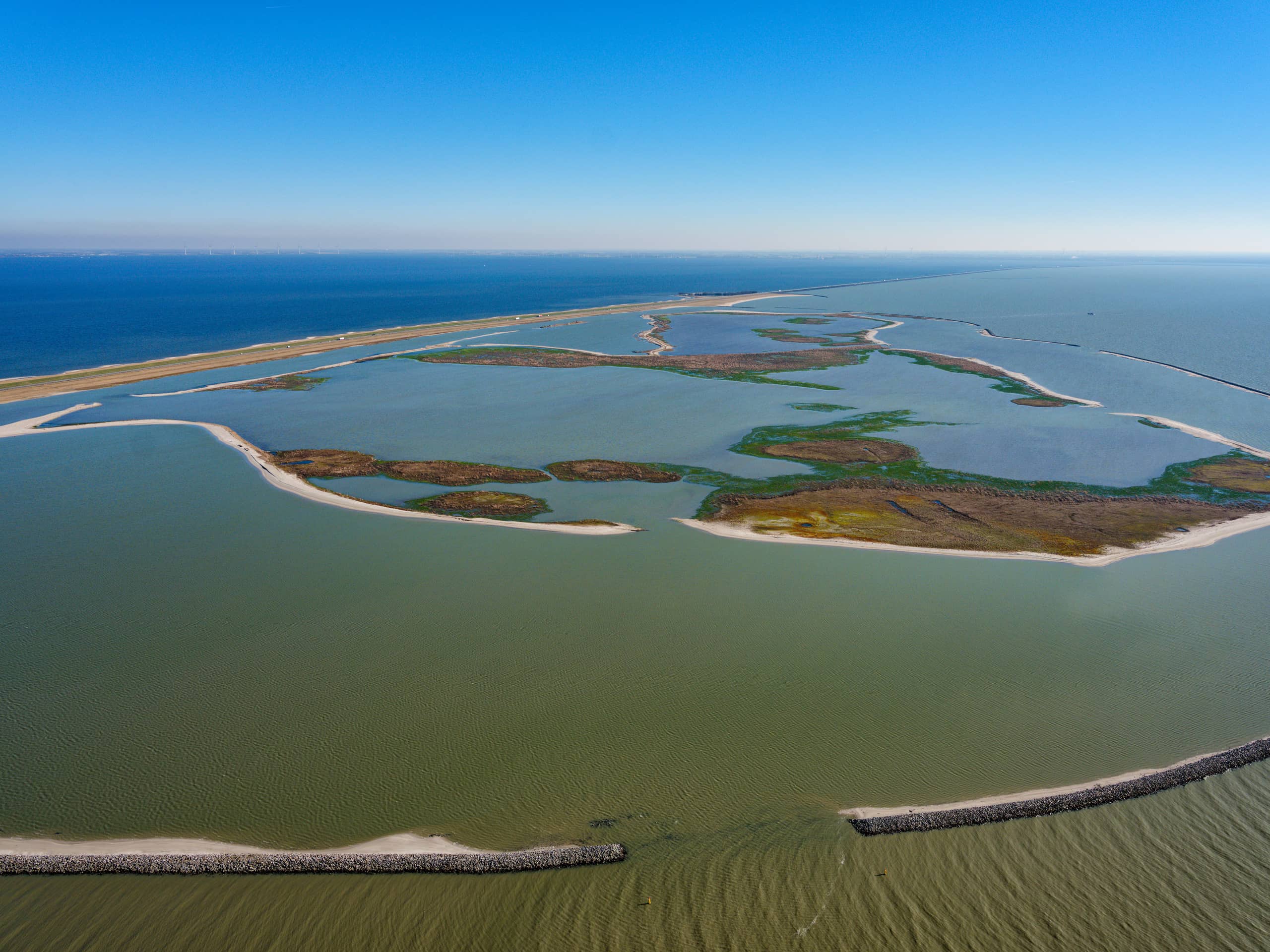
Image: Outlook 2023
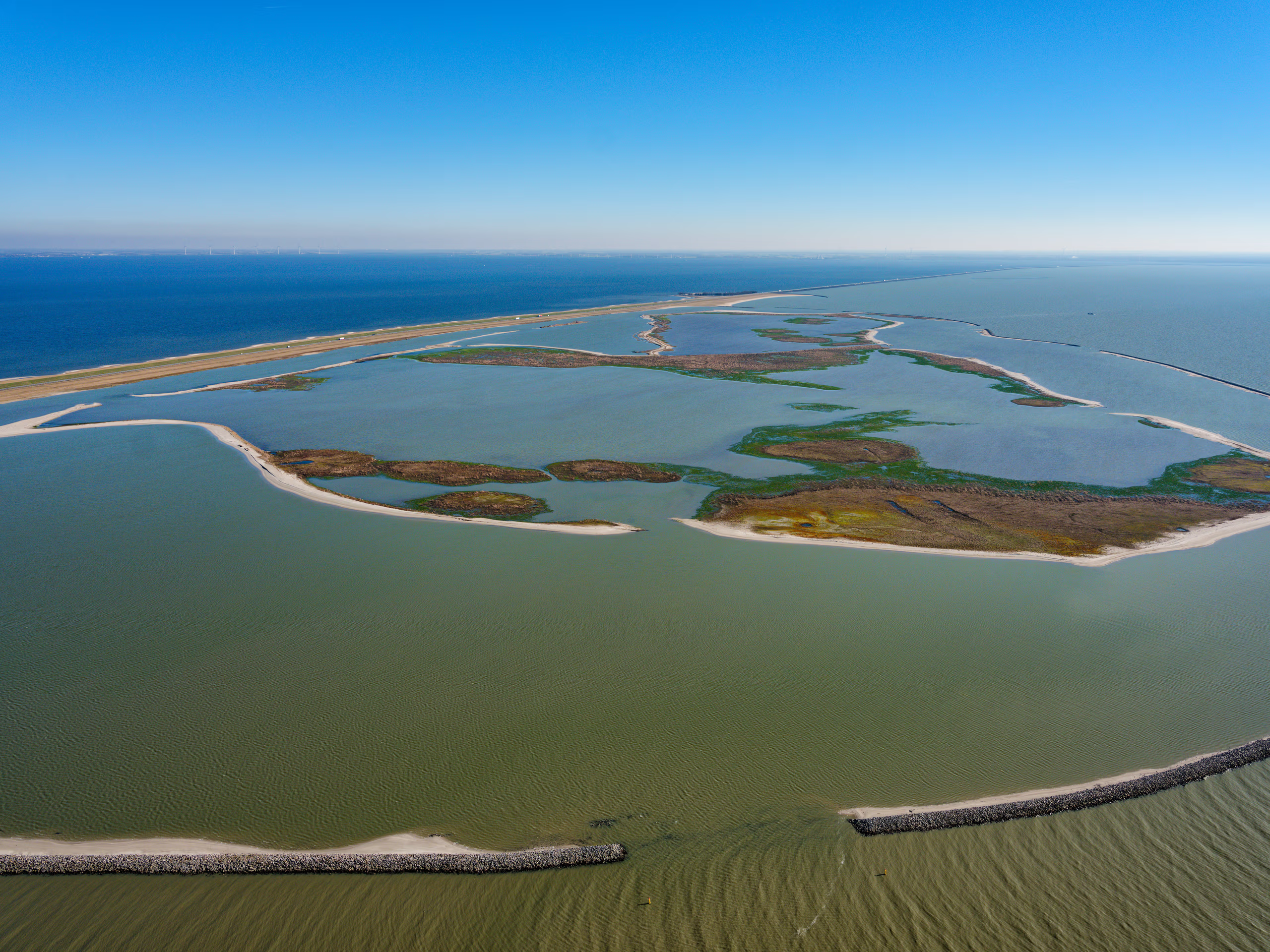
The Houtribdijk functions as a storm buffer between the IJsselmeer and the Markermeer, and creates a wetland nature reserve 370 hectares in size. The construction of Dutch Delta Fund infrastructure such as this dike was partially financed through Green Bonds.
Green Bond Framework
As is common practice with a Green Bond, an independent expert has assessed the Dutch Green Bond. For the green bond in 2023, the DSTA updated the Green Bond Framework in order to ensure it is aligned with the new EU Taxonomy.
On 8 September 2023, the updated Green Bond Framework was published, with a particular focus on water investments such as the Dutch Delta Fund (“blue expenditures”). The expenditures for these specific investments have been mapped against the amendments to the EU Taxonomy which were released this June. Of all twelve eligible economic activities in the Framework, eleven meet all of the required technical screening criteria, while all economic activities meet the substantial contribution criteria. The Green DSL 2044 is the first triple-A sovereign issuance to have “blue” activities fully mapped to the EU Taxonomy.
The Green DSL 2044 covers all expenditures outlined in the Green Bond Framework, fulfilling the substantial contribution criteria of the EU Taxonomy as a minimum. As the new additions to the EU Taxonomy contain –amongst others- criteria for Flood risk prevention and Nature-based solutions for flood risk prevention, the DSTA was able to fully map the Delta Fund expenditures against Taxonomy criteria. By aligning this Framework to these latest additions, the Netherlands emphasises its commitments to protect its citizens.
In addition to the “blue expenditures” also expenditures related to renewable energy, energy efficiency and clean transportation are covered under the Green Bond Framework.
Second Party Opinion obtained from Moody’s
The DSTA appointed Moody’s for an external review of the Green Bond Framework. The Second Party Opinion provided by Moody’s assigns a Sustainable Quality Score of “Excellent” (SQS 1) to the Framework and considers it to be aligned with the four core components of the Green Bond Principles. The most recent assessment by Moody’s in this respect was issued on 28 May 2025.
According to Moody’s, the Framework demonstrates a high overall contribution to sustainability. In addition, based upon information provided by the DSTA, Moody’s considers eleven out of the twelve economic activities to adhere to all EU taxonomy criteria relating to both substantial contribution and do-no-significant-harm (DNSH). For the economic activity where this was not fully possible, it is considered that all criteria are adhered to the EU taxonomy, except for the pollution prevention and control DNSH criterion.
Please refer to the full second party opinion report for further details as well as a description of the methodology used.
Evaluation of the Green Bond Programme
In 2026, the DSTA has published an evaluation (Dutch) of the Dutch Green Bond Programme, covering the period from 2019 to 2025. The policy has been considered effective and efficient: external parties regard Dutch green government bonds as high-quality and an example for other issuers. Furthermore, the European green capital market has developed strongly, with Dutch bond issuance making a contribution.
These goals have been met within set conditions: budget flexibility was not restricted, reporting requirements were manageable, and costs remained limited.
Furthermore, the Netherlands aims to issue the next green government bond according to the European Green Bond Standard, which contributes to further harmonization of the European capital market. In addition, it will be assessed whether a shorter maturity is possible for a new green bond, in order to promote the development of the green capital market and meet investor demand.
Going forward, broadening the investor base will be added as a policy goal for the Green Bond Programme.
Publications
Second Party Opinion Update – Green Bond Framework updated to SQS1 from SQS2
Reopening of the Green DSL January 2044 raises € 1.83 billion
Reopening of the Green DSL January 2044 raises € 2.00 billion
State of the Netherlands - Green Bond Framework - updated 8 September 2023
Second Party Opinion - Green Bond Framework - 2023
One-pager: Reopening Green DSL 2040
Investor presesentation Green DSL 2040
State of the Netherlands Green Bond Framework, CBI Pre-Issuance Letter
State of the Netherlands Green Bond Framework, second-party opinion
Parliamentary letter: Results Green Bond
Climate Bonds Certificate: The State of the Netherlands 2019
Second-party opinion: The State of the Netherlands Green Bond 2019
Dutch State publishes its 2025 Green Bond Report
Dutch State publishes its 2024 Green Bond Report
Dutch State publishes its 2023 Green Bond Report
Dutch State publishes its 2022 Green Bond Report
Dutch State publishes third Green Bond Report 2022
Dutch State publishes second Green Bond Report 2021
Reopening of the Green DSL 15 January 2044 raises € 2.00 billion
Reopening 20-year green DSL 2040 raises € 4.982 billion
New 20-year Green DSL raises 5.98 billion
Preliminary initial spread guidance for new 20-year green Dutch State Loan +18 to +21 basis points
Finance Minister Hoekstra answers parliamentary questions on green bonds